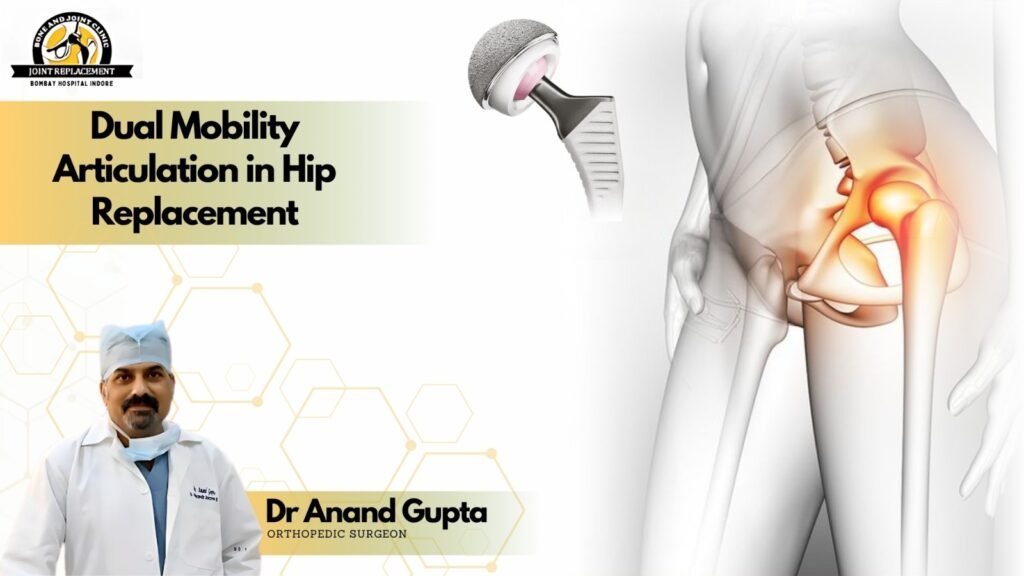
Hip pain does not just affect your joint — it affects your independence. Simple things like getting out of bed, climbing stairs, sitting comfortably, or going for a morning walk start becoming difficult. Many patients try medicines, oils, exercises, and injections for years. But when the cartilage is completely damaged, hip replacement becomes the most reliable solution.
With modern advancements, dual mobility articulation has made hip replacement even safer and more stable, especially for patients who worry about dislocation.
Understanding the Hip Joint in Simple Words
The hip joint is like a ball and socket. The ball is the head of the thigh bone, and the socket is part of the pelvic bone. This structure allows smooth movement in multiple directions.
When arthritis or injury damages this joint, the smooth surface wears out. The bones start rubbing against each other, causing:
- Severe pain
- Stiffness
- Limping
- Difficulty walking
- Trouble sitting cross-legged
In advanced stages, surgery becomes the best option.
What is Hip Replacement Surgery?
In hip replacement surgery, the damaged ball and socket are removed and replaced with artificial components made of metal, ceramic, and special medical-grade plastic.
When performed by a skilled Hip Replacement Surgeon in indore, the goal is not only pain relief but also restoring mobility and stability so patients can return to normal life confidently.
The Concern of Dislocation
One common fear patients have is:
“Doctor, will the artificial joint come out?”
In traditional hip replacement, there is a small risk of dislocation — especially in:
- Elderly patients
- Obese individuals
- Revision surgeries
- Patients with weak hip muscles
- Neurological conditions
Proper planning plays a very important role here. As an Orthopedic Surgeon in vijay nagar indore, I carefully evaluate muscle strength, bone condition, lifestyle needs, and medical history before selecting the most suitable implant, so that long-term stability can be ensured.
What is Dual Mobility Articulation?
Dual mobility is a special type of hip implant design that offers extra stability.
In a normal hip implant, there is one point of movement — between the ball and socket.
In dual mobility, there are two points of movement:
-
A small metal or ceramic head fits into a large plastic liner.
-
That liner moves inside the metal cup fixed in the bone.
This “dual movement” increases the range of motion and reduces the risk of dislocation significantly.
That is why many high-risk patients are advised to consider this advanced option after consultation with a Hip Replacement Surgeon in indore.
Why Dual Mobility is More Stable
Dual mobility implants improve safety in three major ways:
1. Larger Effective Head Size
The larger size improves coverage and reduces slipping.
2. Increased Jump Distance
The head has to travel a greater distance before it can dislocate.
3. Better Movement Distribution
Two articulating surfaces reduce stress on a single point.
In clinical practice, I have seen excellent stability outcomes when the right patient selection and surgical technique are followed carefully by an experienced Orthopedic Surgeon in vijay nagar indore.
Real Patient Story: Mrs. Mehta’s Comeback
Mrs. Sunita Mehta (name changed), a 72-year-old grandmother, came to my clinic holding her son’s hand. She had severe hip arthritis and had stopped attending family functions because walking was painful.
Her biggest fear was falling. She had weak muscles and mild obesity, which increased the risk of dislocation after surgery.
After detailed examination and discussion, I recommended dual mobility hip replacement. Being a Hip Replacement Surgeon in indore, my focus was to reduce her dislocation risk and allow her to walk confidently again.
The surgery went smoothly. She started walking with support on the second day. Within six weeks, she attended her granddaughter’s school function without fear.
At her three-month visit, she said something I will never forget:
“Doctor, I feel stable. I am not scared anymore.”
That stability is exactly what dual mobility is designed to provide.
Who Should Consider Dual Mobility Hip Replacement?
Dual mobility implants are especially beneficial for:
- Patients above 65 years
- Revision hip surgeries
- History of previous dislocation
- Weak hip muscles
- Obese individuals
- Patients with neurological disorders
Careful evaluation is essential because not every patient needs this implant. During consultation, I explain both standard and dual mobility options clearly so that patients can make informed decisions with their Orthopedic Surgeon in vijay nagar indore.
Surgery and Recovery Process
Before Surgery
- Blood tests
- X-rays
- Medical fitness evaluation
- Discussion of implant options
During Surgery
The damaged joint is removed and replaced with the selected implant under anesthesia.
After Surgery
- Walking usually begins within 1–2 days
- Physiotherapy starts early
- Stitches are removed after about 2 weeks
Recovery depends on age, muscle strength, and overall health. With proper rehabilitation guidance from a Hip Replacement Surgeon in indore, most patients regain independence within 4–6 weeks.
Advantages of Dual Mobility Hip Replacement
- Lower risk of dislocation
- Better stability
- Increased range of motion
- Early mobilization
- Greater confidence in movement
Many elderly patients benefit significantly because stability reduces fear of falling, which improves overall quality of life when managed by an experienced Orthopedic Surgeon in vijay nagar indore.
How Long Does the Implant Last?
Modern dual mobility implants can last 15–25 years or more depending on:
- Body weight
- Activity level
- Bone quality
- Surgical accuracy
Correct positioning of the implant is extremely important. That is why choosing a trained Hip Replacement Surgeon in indore makes a major difference in long-term success.
Are There Any Risks?
Like all surgeries, hip replacement carries some risks:
- Infection
- Blood clots
- Implant wear
- Rare mechanical complications
However, with modern operation theatre facilities, proper sterilization, and careful technique, complications are rare when surgery is performed by a skilled Orthopedic Surgeon in vijay nagar indore.
Life After Dual Mobility Hip Replacement
Most patients can:
- Walk comfortably
- Climb stairs
- Sit on chairs easily
- Travel
- Resume social life
Extreme movements may still be restricted depending on your condition, but daily life becomes pain-free and stable.
Regular follow-ups with your Hip Replacement Surgeon in indore ensure the implant remains in good condition for years.
Frequently Asked Questions (FAQs)
1. Is dual mobility hip replacement more expensive?
Yes, it may cost slightly more than standard implants due to its advanced design, but the added stability can prevent future complications.
2. Is the surgery painful?
No. The procedure is done under anesthesia. Post-operative pain is managed with medications, and arthritis pain relief is immediate.
3. Can elderly patients safely undergo this surgery?
Yes. In fact, dual mobility implants are often preferred in elderly patients due to their lower dislocation risk, especially when evaluated properly by an Orthopedic Surgeon in vijay nagar indore.
4. When can I walk normally?
Most patients begin walking within 48 hours and walk independently within 4–6 weeks.
5. Can the joint still dislocate?
The risk is significantly lower compared to traditional implants, particularly when surgery is performed by a skilled Hip Replacement Surgeon in indore.
6. How long is hospital stay?
Usually 3–5 days, depending on recovery.
7. Is physiotherapy necessary?
Yes. It strengthens muscles and ensures better long-term stability.