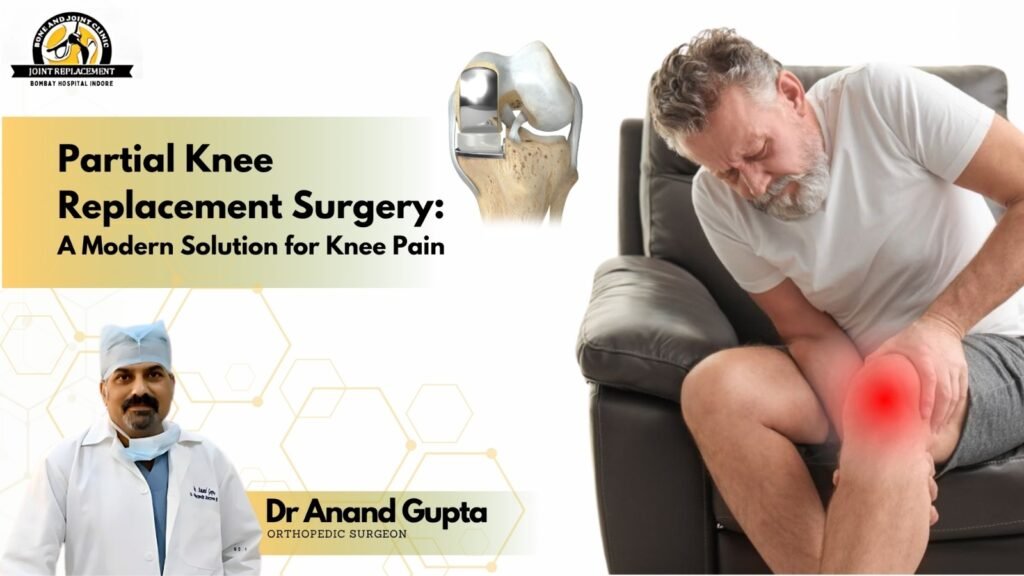
Knee pain can slowly affect every part of daily life. Simple activities like walking, climbing stairs, getting up from a chair, or even standing for a long time may become difficult. Many people try medicines, physiotherapy, exercises, and lifestyle changes for relief, but when the pain continues and starts affecting mobility, surgery may become the best option.
Partial knee replacement surgery is one of the advanced treatment options available today for people who have damage only in one part of the knee joint. Unlike total knee replacement, this procedure preserves healthy parts of the knee and helps patients recover faster with better movement.
Many people looking for the right treatment often search for an experienced Orthopedic Surgeon in Indore who can guide them properly about whether partial knee replacement is suitable for their condition.
What Is Partial Knee Replacement Surgery?
Partial knee replacement surgery, also called unicompartmental knee replacement, is a procedure where only the damaged portion of the knee joint is replaced with an artificial implant. The healthy cartilage, bone, and ligaments in the remaining knee are preserved.
The knee is divided into three compartments:
- Inner (medial)
- Outer (lateral)
- Front (patellofemoral)
If arthritis or damage is limited to only one compartment, partial knee replacement can be an excellent option.
An experienced knee replacement surgeon in Indore can evaluate the condition of the knee using physical examination, X-rays, and scans to decide whether this surgery is appropriate.
Who Needs Partial Knee Replacement?
Not every patient with knee pain requires total knee replacement. Partial knee replacement is usually recommended for patients who:
- Have arthritis limited to one part of the knee
- Experience pain during walking or movement
- Have stiffness in the knee joint
- Do not get relief from medications or physiotherapy
- Have stable knee ligaments
- Want a quicker recovery and more natural knee movement
People who visit an experienced Orthopedic Surgeon in Indore often learn that early diagnosis can help preserve more of the natural knee and improve long-term mobility.
Common Causes of Knee Damage
Several conditions can damage the knee joint over time. These include:
- Osteoarthritis
- Age-related wear and tear
- Old sports injuries
- Obesity
- Rheumatoid arthritis
- Previous fractures around the knee
Knee arthritis is one of the most common reasons people consult a knee replacement surgeon in Indore for treatment options.
Symptoms That Should Not Be Ignored
Many people ignore knee pain for years thinking it is a normal sign of aging. However, persistent symptoms should be evaluated properly.
Common symptoms include:
- Knee pain while walking
- Swelling around the knee
- Difficulty climbing stairs
- Knee stiffness in the morning
- Cracking or grinding sounds
- Trouble sitting cross-legged
- Pain even during rest
If these symptoms continue despite treatment, consulting an Orthopedic Surgeon in Indore can help prevent further joint damage.
Difference Between Partial and Total Knee Replacement
One of the most common questions patients ask is the difference between partial and total knee replacement.
Partial Knee Replacement
- Only damaged portion is replaced
- Smaller incision
- Faster recovery
- Less blood loss
- More natural knee movement
- Shorter hospital stay
Total Knee Replacement
- Entire knee joint is replaced
- Recommended when damage is severe in all compartments
- Slightly longer recovery period
A skilled knee replacement surgeon in Indore carefully evaluates which procedure is best depending on the severity of arthritis and overall knee condition.
Benefits of Partial Knee Replacement Surgery
Partial knee replacement has become increasingly popular because of its many advantages.
Faster Recovery
Patients usually recover faster compared to total knee replacement surgery.
Less Pain After Surgery
Since only a small portion of the knee is operated upon, postoperative pain is generally less.
Smaller Surgical Cut
The incision is smaller, which also means less tissue damage.
Better Knee Movement
Because healthy parts of the knee are preserved, patients often feel that the knee moves more naturally.
Shorter Hospital Stay
Many patients are able to walk within a day after surgery.
An experienced Orthopedic Surgeon in Indore can help patients understand these benefits in detail before planning surgery.
How Is the Surgery Performed?
The procedure is performed under anesthesia. During surgery:
- The damaged cartilage and bone are removed.
- The healthy parts of the knee are preserved.
- Artificial implants made of metal and plastic are fixed in the affected area.
- The incision is closed carefully.
The surgery usually takes around 1 to 2 hours depending on the condition of the knee.
Choosing an experienced knee replacement surgeon in Indore is important for proper implant placement and successful long-term results.
Recovery After Partial Knee Replacement
Recovery plays a major role in the success of the surgery. Most patients begin standing and walking with support within 24 hours.
Recovery Timeline
- Walking starts within 1 day
- Basic daily activities in 2–3 weeks
- Comfortable walking in 4–6 weeks
- Full recovery in a few months
Physiotherapy is extremely important after surgery to improve strength and flexibility.
Patients treated by a skilled Orthopedic Surgeon in Indore are usually guided with personalized rehabilitation exercises for better recovery.
Life After Surgery
One of the biggest advantages of partial knee replacement is improvement in quality of life. Many patients are able to:
- Walk comfortably
- Climb stairs with less pain
- Perform daily activities independently
- Sleep better due to reduced pain
- Return to work and social activities
Maintaining a healthy weight and staying physically active can improve the lifespan of the implant.
Many people consulting a knee replacement surgeon in Indore are surprised to know that modern implants can last for many years with proper care.
Risks and Complications
Like any surgery, partial knee replacement also carries some risks, although complications are uncommon when performed by experienced surgeons.
Possible risks include:
- Infection
- Blood clots
- Implant loosening
- Knee stiffness
- Persistent pain
Following medical advice, physiotherapy, and regular follow-ups help reduce complications significantly.
An experienced Orthopedic Surgeon in Indore always explains both benefits and risks clearly before surgery.
Tips for Faster Recovery
Patients can improve recovery after surgery by following a few simple tips:
- Do physiotherapy regularly
- Walk daily as advised
- Avoid excessive weight gain
- Eat a healthy protein-rich diet
- Take medicines on time
- Avoid high-impact activities initially
Regular follow-up with a knee replacement surgeon in Indore ensures proper healing and implant function.
Can Younger Patients Undergo Partial Knee Replacement?
Yes, partial knee replacement is not limited only to elderly patients. Younger individuals with isolated compartment damage may also benefit from this surgery.
Sports injuries, obesity, or early arthritis can sometimes damage only one part of the knee joint. In such situations, preserving the healthy portion of the knee can provide better long-term function.
Consulting an experienced Orthopedic Surgeon in Indore can help younger patients explore treatment options before arthritis worsens.
Importance of Early Treatment
Ignoring knee pain can gradually worsen the condition and may eventually require total knee replacement. Early treatment can sometimes delay surgery and preserve knee function for longer.
Timely consultation with a knee replacement surgeon in Indore can help identify the exact cause of pain and provide the most suitable treatment plan.
Conclusion
Partial knee replacement surgery is an advanced and effective treatment for patients with damage limited to one part of the knee. It offers faster recovery, less pain, smaller incisions, and more natural movement compared to total knee replacement in selected patients.
The key to successful treatment lies in proper diagnosis, timely intervention, and choosing the right surgeon. If knee pain is affecting your daily routine and limiting your mobility, seeking expert medical guidance can help you return to an active and comfortable life again.
FAQs About Partial Knee Replacement Surgery
1. Is partial knee replacement better than total knee replacement?
It depends on the condition of the knee. If damage is limited to one compartment, partial knee replacement can provide excellent results with faster recovery.
2. How long does partial knee replacement surgery take?
The surgery usually takes around 1 to 2 hours.
3. How soon can I walk after surgery?
Most patients can start walking with support within 24 hours after surgery.
4. Is partial knee replacement painful?
Some discomfort is normal after surgery, but pain is usually manageable with medicines and physiotherapy.
5. How long does the implant last?
Modern implants can last for many years depending on activity level, weight, and overall joint care.
6. Who is the right candidate for partial knee replacement?
Patients with arthritis limited to one part of the knee and stable ligaments are usually good candidates.
7. Can both knees be treated with partial knee replacement?
Yes, if both knees have isolated compartment damage, surgery may be considered for both sides separately or together depending on medical evaluation.
8. When can I return to normal activities?
Most patients return to routine daily activities within a few weeks, while complete recovery may take a few months.
9. Is physiotherapy necessary after surgery?
Yes, physiotherapy is essential for improving knee movement, strength, and recovery.
10. When should I consult a doctor for knee pain?
If knee pain persists for several weeks, affects walking, or limits daily activities, medical consultation is recommended.